
Lieferzeit in ganz Litauen: 5-10 Werktage
Lieferpreis an die angegebene Adresse: 3 Euro






Trumpai apie prekę
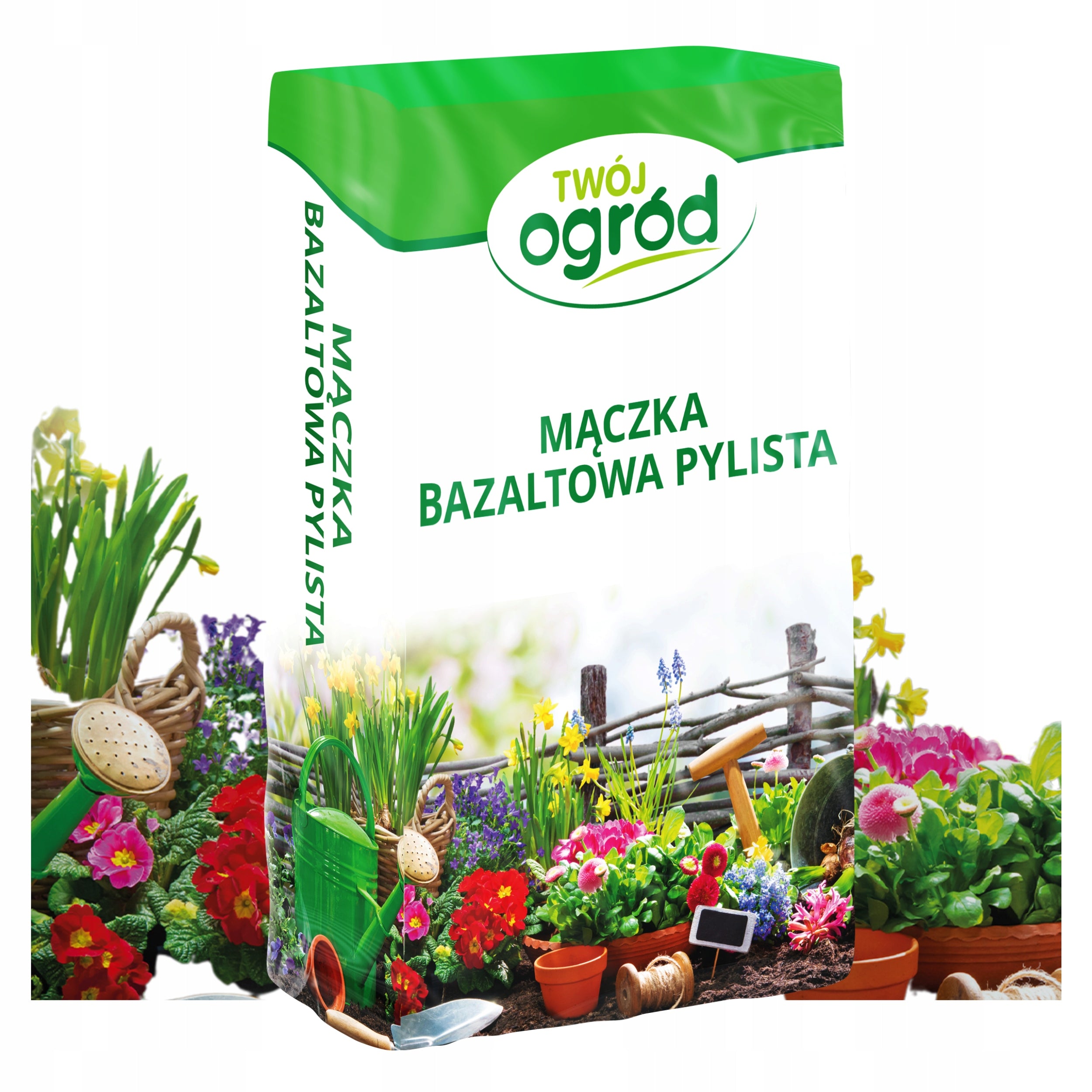
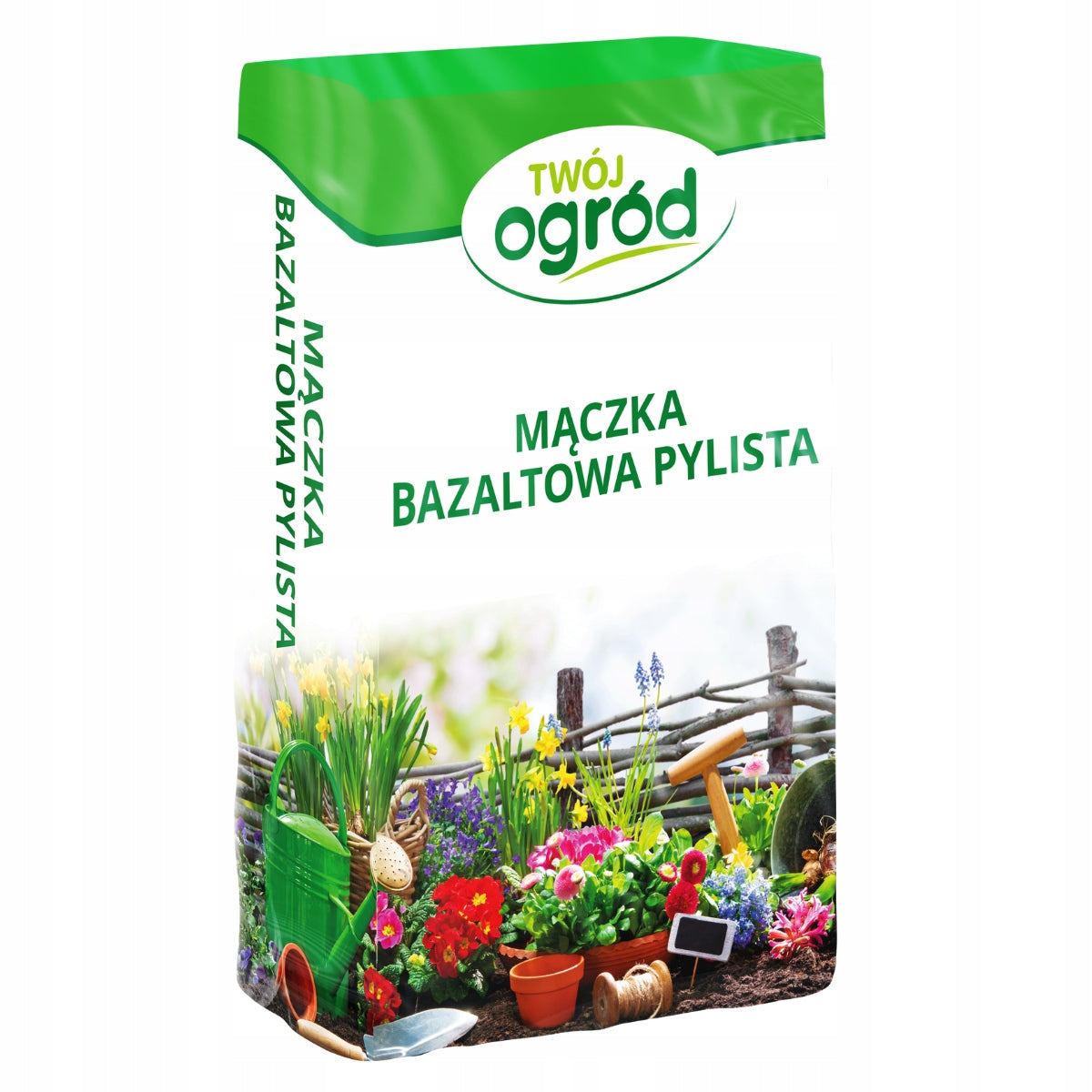
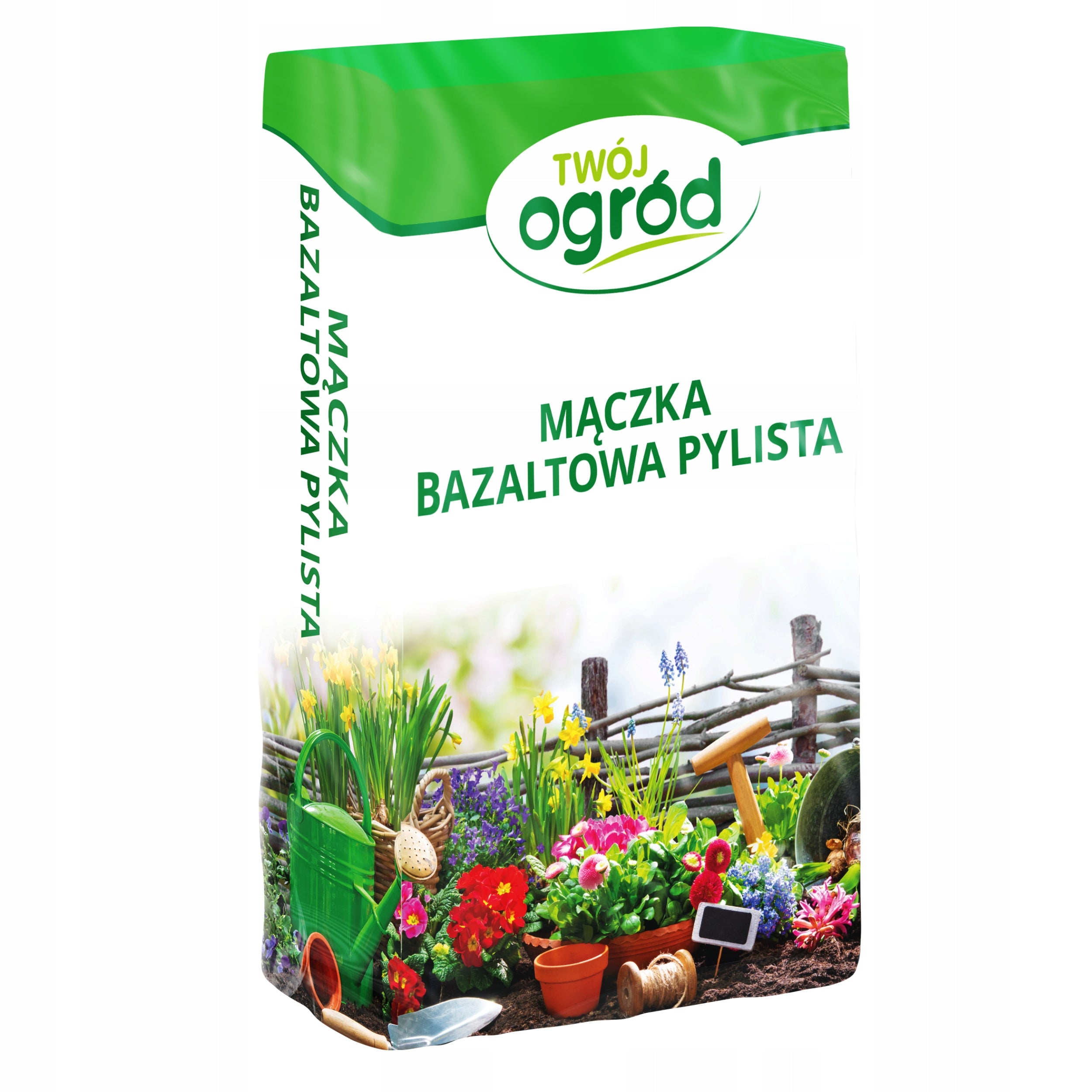
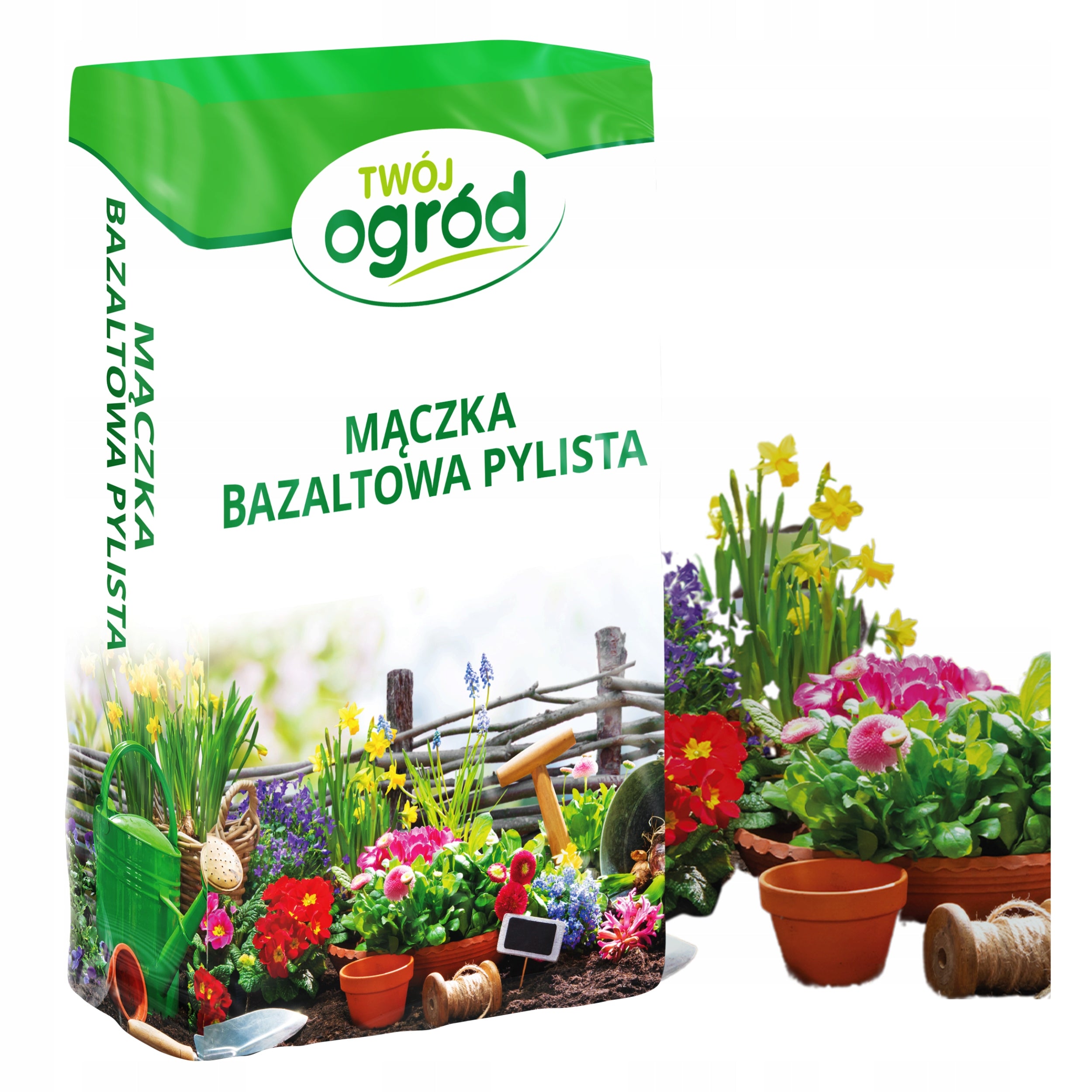
Prekė: Bazaltiniai miltai 10 kg, natūrali trąša, apsauga nuo sraigių, stiprina augalus. Kategorija: Trąšos.
- Gamintojas: Twój Ogród
- Modelis: mineralny nawóz do warzyw owoców trawników
- Svoris: 10 kg
Basalt meal Twój Ogród 10 kg is a natural mineral fertilizer in the form of a fine powder, made from ground basalt rock. The product enriches the soil with minerals, supports the improvement of its structure and helps maintain the good condition of plants in the garden.
Basalt meal can be used in vegetable garden, orchard, fruit bushes, ornamental plants, lawns, compost and as an addition to the substrate. It also works as an auxiliary as a dry mechanical barrier for snails – especially around young seedlings, vegetables, herbs, strawberries and ornamental plants.
A fine mineral powder forms a dry layer around the plants, on which snails find it harder to move. The product is not a poison or snail killer – it works physically as a natural support in limiting the access of snails to plants.
✅ Natural mineral product of ground basalt rock
✅ Supports improvement of soil structure
✅ Enriches the substrate with macro- and microelements
✅ Mineral components are gradually released into the soil
✅ Helps increase soil’s ability to retain water and nutrients
✅ Supports the development of roots, stems, leaves and fruit
✅ The silica contained helps to strengthen plant tissues
✅ For vegetable garden, orchard, fruit bushes, rebate and lawn
✅ Can be used as a compost additive
✅ Useful for seed treatment and substrate enrichment
✅ Can be used as an auxiliary for pollinating plants
✅ Creates a dry mechanical barrier for snails
✅ It is not a chemical poison for snails
✅ Pack of 10 kg – practical quantity for garden, vegetable garden and orchard
Especially recommended as a barrier to snails
Basalt meal Twój Ogród can be used around plants as a dry mineral mechanical barrier for snails. The fine powder forms a layer that makes it difficult for snails to move towards plants.
This application is especially useful for young seedlings, which are most vulnerable to damage. The flour can be scattered around lettuce, cabbage, cucumbers, zucchini, pumpkin, beans, strawberries, herbs, host, velvet, dahlias and other plants with delicate leaves.
The barrier works best when it stays dry. After rain, watering or moisture, it should be renewed so that it continues to form a protective belt around the plants.
How to use basalt meal for snails?
- Choose plants exposed to snails – young seedlings, vegetables, herbs, strawberries or ornamental plants.
- Spread dry meal around the plant in the form of a ring or belt.
- Take care of the continuity of the barrier – the border should not have breaks.
- Use on a dry, windless day so that the powder stays well on the soil surface.
- Renew the layer after rain or watering because the barrier works best when it stays dry.
Where is it worth using a barrier against snails?
In the vegetable garden – around lettuce, cabbage, cucumbers, zucchini, pumpkin, beans and young seedlings.
With strawberries – around individual plants or along rows.
With herbs – around basil, mint, parsley, coriander and other delicate plants.
On decorative discounts – at hosts, dahlias, velvets, young perennials and flowers.
In the tunnel and greenhouse – with vegetable seedlings and plants grown in wetter conditions.
In pots and crates – around balcony plants, herbs and vegetables in containers.
Additional ways to use
Barrier to snails
Sprinkle dry meal around the plants in the form of a continuous ring. After raining or watering, recreate the layer.
Plant spraying
Apply a thin layer on a dry and windless day. Avoid excessive dusting.
Compost additive
Add the flour to the compost prism as a mineral compost enriching ingredient.
Additive to the substrate
Mix a small amount of meal with the ground for potted, balcony or garden plants.
Seed treatment
Gently roll dry seeds in flour before sowing.
Planting the lawn
Mix the meal with the top layer of soil when preparing the substrate for sowing grass.
1. What is basalt meal used for?
To enrich the soil with minerals, improve its structure and support the growth and condition of plants.
2. Can basalt meal be used on snails?
Yes, it can be used as an auxiliary dry mechanical barrier around plants exposed to snails.
3. Does basalt meal kill snails?
No. The product is not a snail killer. It works mechanically, creating a dry layer that makes it difficult for snails to move around.
4. How to use basalt meal for snails?
Sprinkle dry meal around the plant in the form of a continuous ring or protective belt.
5. Does the snail barrier need to be renewed?
Yes, after rain, watering or dampening, the meal layer should be renewed.
6. What plants should I use a snail barrier for?
With lettuce, cabbage, cucumbers, zucchini, strawberries, herbs, hosts, velvets, dahlias and young seedlings.
7. Is basalt meal natural?
Yes, it is a mineral product made from ground basalt rock.
8. What form does the product take?
The product is in the form of a fine powder.
9. How much does the package weigh?
The package contains 10 kg basalt meal.
10. What area is 10 kg enough for?
The packaging is sufficient to sprinkle about 250 m² at a dose of 0,4 kg / 10 m².
11. Can I use the meal all year round?
Yes, the product can be used throughout the year.
12. How to use meal in a vegetable garden?
Spread evenly on the soil surface and mix with the substrate to a depth of about 10 to 15 cm.
13. What is the dosage for vegetable plants?
Once every 4 years 2 – 3 kg / 10 m² or systematically once a year 0,4 – 0,5 kg / 10 m².
14. Can it be used in the orchard?
Yes, meal can be used in fruit crops before the orchard is established or with existing trees and shrubs.
15. How to dose in fruit crops?
The recommended dose is 0,5–1 kg / 10 m².
16. Is the meal suitable for fruit bushes?
Yes, it can be used for fruit bushes such as raspberries, currants, gooseberries, blackberries and more.
17. Can it be added to compost?
Yes, it can be used as a mineral additive for compost.
18. Is it suitable for potted plants?
Yes, it can be added to the potting substrate in small quantities and mixed well with the ground.
19. Can you use it when setting up your lawn?
Yes, the meal can be mixed with the soil when preparing the substrate for the lawn.
20. Can seeds be treated with it?
Yes, the product can be used for dry rolling of seeds before sowing.
21. Can plants be sprayed with it?
Yes, it can be used as an aid to gently dust plants on a dry, windless day.
22. Do I need to mix meal with soil?
When fertilizing the soil, it is recommended to mix the product with the substrate to a depth of about 10 to 15 cm.
23. Does the product dust during use?
Yes, it has the form of a dusty powder, so it is best to use it on windless days and avoid inhaling dust.
24. How to store basalt meal?
In a dry place, in a tightly closed package, out of reach of children and animals.
Specifications
| Group | Name | Value |
|---|---|---|
| Parametry | Condition | new |
| Parametry | Invoice | With VAT invoice |
| Parametry | Manufacturer | Twój Ogród |
| Parametry | Form | powder |
| Parametry | Weight | 10 kg |
| Parametry | Volume | 10 l |
| Parametry | Fertilizer type | basalt meal |
| Parametry | Product weight with unit packaging | 10.05 kg |
| Parametry | Manufacturer code | mineralny nawóz do warzyw owoców trawników |
| Parametry | EAN (GTIN) | 5900644538110 |
| Parametry | Packaging status | original |
| Parametry | Application period | all year |
| Parametry | Purpose | for fruit bushes,for flower care,for balcony plants,for leafy plants,for lawns,for vegetables |