
Piegādes termiņš katrai precei ir norādīts pie cenas bloka.
Piegāde visā Lietuvā: bez maksas.


Trumpai apie prekę
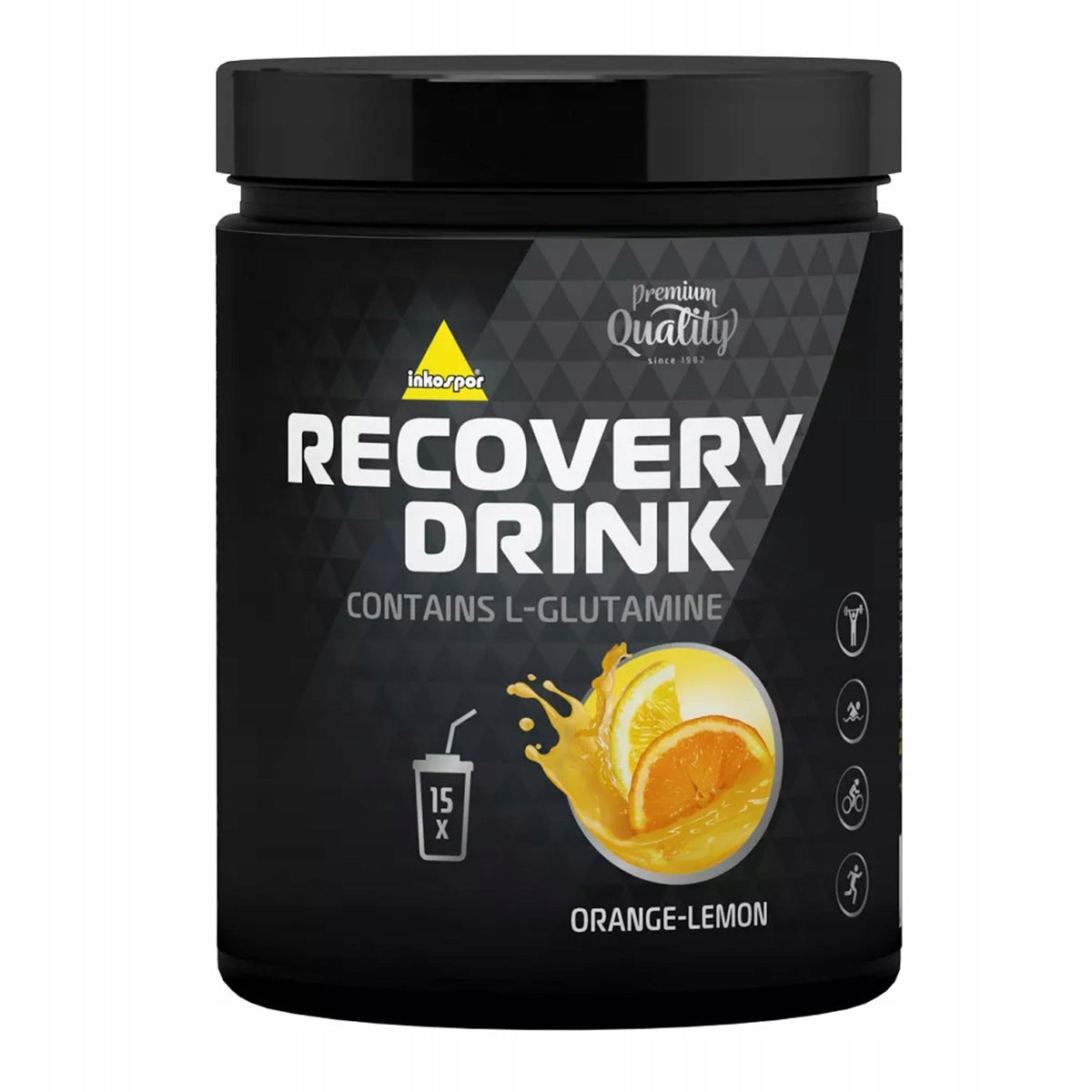
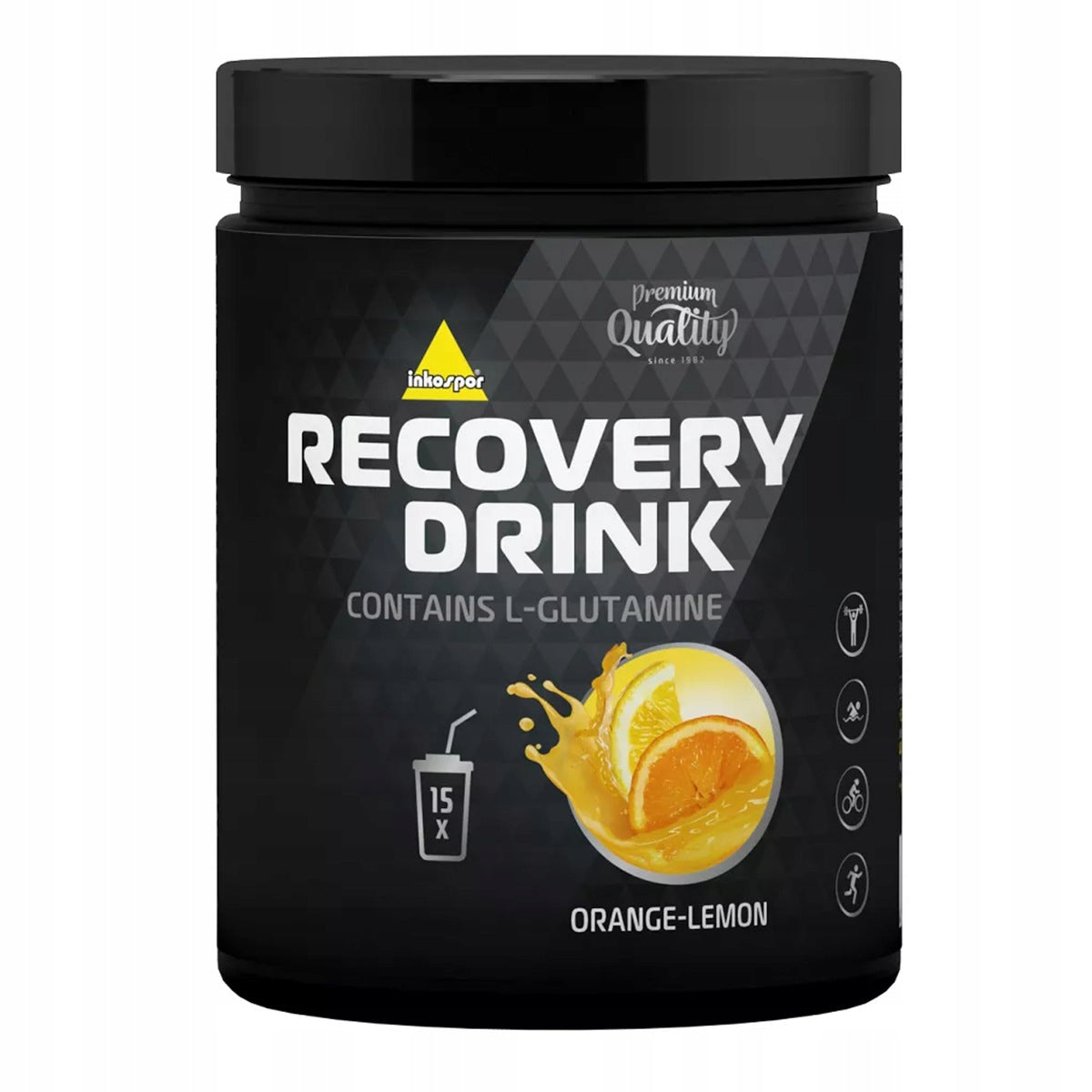
Prekė: Atkuriamasis gėrimas INKOSPOR 525 g su glutaminu, baltymais, mineralais ir vitaminu B1. Kategorija: Masės didinimo papildai.
- Gamintojas: Inkospor
- Svoris: 525 g
Fast recovery!
Preparation in the form of a powder used to prepare a regenerative drink containing complex carbohydrates, isolated whey protein, L-glutamine, vitamin B1, potassium and trace elements: zinc and selenium.
Recovery Drink has been specially developed for the needs of competitive athletes practicing strength and endurance disciplines. This drink supports rapid regeneration both after training and competition, providing the body with the necessary energy in the form of carbohydrates with a special combination of particle size and satisfying the body's increased, post-workout demand for amino acids, L-glutamine and special minerals and vitamins.
Only those who quickly regain their form, ensure their intended training effects, avoid fatigue and overtraining syndrome, and can undertake further training faster, bringing them closer to achieving the master sports form.
Since the stomach, especially after exercise, reacts negatively to acidic products, the acidity of this drink is maintained at a particularly low level. Recovery Drink is therefore a regenerative drink, perfectly tolerated by the body after the end of physical exertion.
Recovery Drink is designed for all competitive athletes, in particular those practicing strength and endurance disciplines. The preparation is in the form of a powder, from which you can easily prepare a drink, combining it with cool water. The product is distinguished by a high content of carbohydrates and amino acids, which provide the body with energy and building components necessary for post-workout regeneration. The drink is intended to be consumed after training or competition.
Recovery Drink – what does it contain?
Carbohydrates belong next to proteins and fats to the group of essential macronutrients. Like fats, they have an energy function in the body first. Due to the unique energy of carbohydrates, the tissues consuming the most energy have developed the ability to store them in the form of glycogen. Glycogen is a multisugar whose molecules are made of approx. 100 thousand. combined glucose molecules. Ultimately, the sugar used by the body in energy processes is mainly glucose, to which the carbohydrates we usually consume are transformed. Particularly high glucose storage capacity in the form of glycogen is characterized by liver and muscle tissue. Glycogen accounts for 5% of liver weight and 0.7% of muscle mass, however, due to the generally higher total muscle mass, approx. ¾ glycogen of the human body remains stored in muscle tissue. So although carbohydrates, unlike proteins, are not the basic building blocks of muscles, taking into account the fact that glycogen binds 4 times more in relation to its volume of water, they generally form approx. 3% muscle mass. Consumed within a period of up to several dozen minutes from the end of exercise, carbohydrates most effectively rebuild muscle glycogen stores and increase its resources above pre-exercise values, which effect is called glycogen overcompensation. The degree of muscle saturation with glycogen depends on the efficiency of work in endurance disciplines. And because the muscle-building process of protein synthesis is extremely energy-intensive, therefore, the post-workout intake of carbohydrates, in the right proportion to protein intake, also depends on the rate of muscle mass and strength gain in response to strength training. It is also important that the carbohydrates consumed after training, as in the case of Recovery Drink, at least partially have the form of small molecules, because they have the ability to activate insulin – a hormone that regenerates and develops muscle tissue.
Whey protein isolate is characterized by an exemplary proportion of amino acids that build proteins of our muscles and other structures of our body. Whey proteins and peptides retain their unchanged structure in the isolate, which determines their specific biological activity, going beyond the function of the source of amino acids. Bioactive peptides and the standard amino acid composition are the factors that distinguish whey protein isolates from other sources of food proteins. Compared to other sources of food proteins, amino acids derived from whey protein isolates reach maximum concentrations in the bloodstream faster. They are also more 30% more developed by muscle fibers. This is important in the case of a post-workout drink, because the body can optimally use amino acids for muscle regeneration and development mainly within a period of up to several dozen minutes from the end of physical exercise. Therefore, compared to the consumption of proteins from another source, whey protein intake stimulates 37% more post-workout muscle protein synthesis. The anabolic activity of whey peptides and the ability of whey proteins to stimulate the production and activity of the body's own anabolic hormones, such as insulin, IGF-1 and testosterone, also contribute to this effect.
Glutamine is one of the 20 amino acids commonly found in protein. Glutamine is a relatively essential amino acid, i.e. one that can be produced by the body, but from the synthesis of which the body will not keep up in situations of increased demand, e.g. during prolonged, intense physical exertion. Glutamine is an amino acid that reaches the highest concentrations in muscle tissue and blood plasma. The main place of glutamine production in the body is muscle tissue. Glutamine performs numerous biological functions in the body, going beyond the role of a component of proteins, the most important of which seems to be the role of an energy source for immune and intestinal cells, an organic nitrogen transporter for all tissues and a precursor of glutathione and citrulline. Organic nitrogen is essential for protein production, and glutathione and citrulline are important factors involved in muscle tissue growth. Studies have shown that glutamine is an amino acid closely related to muscle life balance and muscle protein production. Its high resources in muscle tissue stimulate production and inhibit protein breakdown, and deficiency results in opposite effects, which seems to be a phenomenon specific to glutamine. Due to the specific role played by glutamine in the process of muscle protein synthesis, the special benefits of its post-workout supplementation are physically active and athletes practicing strength disciplines that require the development of muscle mass and strength. On the other hand, very long-term efforts, characteristic of endurance disciplines, lead to the depletion of glutamine resources and the associated deficit of impairment of the immune and digestive systems, for which glutamine systems are the primary source of energy. Thus, post-workout supplementation with L-glutamine helps maintain high efficiency of the immune and digestive systems. At the same time, studies have observed that L-glutamine, used in disciplines requiring long aerobic efforts, leads to an increase in work efficiency.
Potas is an element of the macroelement group necessary for the course of life processes. It is one of the five basic elements controlling the water-electrolyte balance of the body, together with sodium, magnesium, calcium and chlorine. When scientists incubated satellite cells (stem muscle cells) and young muscle fibers supplemented with potassium salt culture medium for 2 hours in a study conducted during their time,which was consistent with the conditions prevailing in the muscles after intensive work,in the following hours, the levels of anabolic growth factors IGF-1 and MGF increased in these cells,regenerating and developing muscle tissue, reaching the highest concentration 24 hours after incubation. In satellite cells and young muscle fibers, IGF-1 levels increased similarly, or roughly 3-fold. Surprisingly, however, he reacted vigorously to potassium MGF, the most effective muscle regenerator and stimulator of muscle development, the value of which increased in satellite cells about 14 times, and in young muscle fibers – as much as 40 times. At the same time, this procedure increased almost 2-fold the degree of multiplication of satellite cells, which regenerate and expand muscle tissue in post-workout conditions. Therefore, taking into account the results of this study, we must consider that potassium is a mineral component that should be supplemented in the post-workout period as a priority.
Zinc is an essential element from the group of microelements. According to experts, the presence of zinc depends on the activity of over 300 enzymes. In the context of post-workout processes, the most important is the fact that zinc is also an element necessary for the course of the myogenesis process, consisting in the transformation of muscle stem cells (so-called. satellite cells) into mature muscle fibers, which regenerates muscles and is responsible for their development. Zinc is also an element of the construction of transcription factors that initiate the regenerating and muscle-building process of muscle protein synthesis. In general, this element is characterized by an extremely wide spectrum of biological and health properties,where its participation in antiviral and antiradical protection of the body comes to the fore,in maintaining the proper condition of muscles, skin, nails and hair,maintaining normal prostate function and normal levels of male sex hormone,testosterone, regenerating and developing musculature.
Selen is an essential element from the group of microelements, needed in the first place by our body for the production of specific proteins called selenoproteins. However, for physically active people, the most important are the functions performed by selenoprotein N – a selenium-dependent cellular protein specific to muscle fibers – especially important for the strength abilities of working muscles. As shown in studies, selenium supplementation can increase the production of selenoprotein N in muscle fibers by up to 12 times, which automatically strengthens their ability to produce strength by 2 times.
Vitamin B1, or thiamine, increases muscle protein synthesis and improves muscle strength and training performance, and taking this vitamin also promotes the increase in volume and weight of muscle tissue.
Why choose Recovery Drink?
Recovery Drink is distinguished by a pleasant orange-lemon taste. The product is not acidic, thanks to which the drink is very well tolerated by the body, especially in the post-workout season.
The preparation is distinguished by excellent bioavailability, thanks to which it effectively replenishes and increases muscle glycogen stores. The product composed of carbohydrates, whey protein isolate, L-glutamine and appropriate minerals and vitamins allows you to supplement nutrients lost during exercise, activating post-workout regeneration and muscle adaptation to exercise in the form of improving their endurance and gaining strength and mass.
It affects the reduction of post-workout muscle soreness, and also contributes to faster regeneration after each effort, which translates into the possibility of conducting sports preparation sessions, in accordance with the previously assumed plan.
Ingredients: maltodextrin, whey protein isolate (from milk), sugar, acidity regulator (citric acid), L-glutamine 5,1%, potassium citrate, aroma, sweeteners (cyclamates, saccharin, acesulfame K), emulsifier (lecithins), zinc gluconate, selenium from y, dye (beta-carotene), thamine. Contains sugar and sweeteners.
Nutrient content, in 100 g powder*, % NRV**, per serving (35 g powder)*, % NRV**
- Energy value, 1590 kJ / 374 kcal, , 557 kJ / 131 kcal,
- Fats, < 0,5 g, , < 0,5 g,
- – including saturated fatty acids, 0,2 g, , < 0,1 g,
- Carbohydrates, 55 g, , 19 g,
- – including sugars, 26 g, , 9 g,
- Protein, 29 g, , 10 g,
- Salt, 0,16 g, , 0,06 g,
- Potassium, 603 mg, 30%, 211 mg, 11%
- Zinc, 7,2 mg, 72%, 2,5 mg, 25%
- Selenium, 89 µg, 162%, 31 µg, 56%
- Vitamin B1, 2 mg, 182%, 0,71 mg, 65%
- L-glutamine 5143 mg, 1800 mg,
L-glutamine content: 5,1 g in 100 g powder / 1,8 g per serving (35 g powder).
Preparation: thoroughly dissolve 35 g of powder (2 scoops) in 400 ml of cool water. Preparation of the preparation with a liquid other than water will change its nutritional and caloric value.
Usage: we recommend drinking 1 serving (35 g) per day, preferably immediately after exercise.
Do not exceed the recommended daily intake. This product is not a substitute (replacement) for a varied diet. A healthy lifestyle and a balanced diet are recommended.
Store in a dry room, at room temperature, in a tightly closed package, out of reach of small children.
Specifications
| Group | Name | Value |
|---|---|---|
| Parametry | Condition | new |
| Parametry | Invoice | With VAT invoice |
| Parametry | Kind | gainer |
| Parametry | Brand | Inkospor |
| Parametry | Form | powder |
| Parametry | Weight | 525 g |
| Parametry | Number of servings per packaging | 20 |
| Parametry | Expiration date | at least 1 year from the date of purchase |
| Parametry | EAN (GTIN) | 4260057666468 |
| Parametry | Packaging status | original |
| Parametry | Medical device | no |